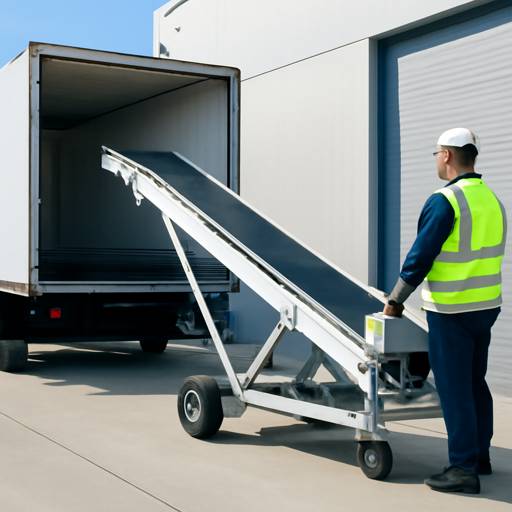
Move More, Hurt Less: How a Truck Unloading Conveyor Transforms Your Dock
Every minute a trailer sits at the dock, costs compound—labor, fuel, detention fees, and missed delivery windows. A modern truck unloading conveyor turns the most physical, variable step in inbound logistics into a predictable, fast, and safer flow. From bustling parcel hubs to lean regional warehouses, the right conveyor unlocks measurable gains in throughput, ergonomics, and overall dock performance.
What a Truck Unloading Conveyor Actually Does—and Why It Matters
A truck unloading conveyor is a purpose-built material handling system designed to move cartons, parcels, bags, tires, totes, or loose-loaded freight directly from a vehicle to a receiving line with minimal manual handling. Instead of workers carrying loads down the length of a trailer, a conveyor extends into the vehicle, presents items at an ergonomic height, and feeds product into downstream sortation or staging. The result is a steady, controlled flow that reduces bending, twisting, and high-risk lifts while boosting pace and consistency.
Two core styles dominate: telescopic belt conveyors and flexible roller conveyors. Telescopic belt units feature powered booms that extend into the truck; belts handle a wide range of packages, including irregulars and soft packs. These machines often include operator controls at the boom, integrated lighting, soft-start motors, emergency stops, and photo-eyes for auto-stop. Flexible conveyors, available in gravity or powered roller versions, are ideal when a facility needs an adaptable line that can snake around obstacles, handle seasonal surges, or share equipment across doors.
Operationally, the payoffs are immediate. A dock crew can keep a continuous, even pace rather than alternating between sprinting and waiting. With adjustable elevation and controlled speed, product damage drops because cartons aren’t stacked precariously or tossed. In hot, cold, or humid conditions, reducing time spent deep inside a trailer cuts fatigue and improves safety. Finally, planners benefit from predictable cycle times—more consistent unload durations shrink dwell time and help hit the next process step on schedule.
Modern solutions such as the truck unloading conveyor are built for the realities of today’s cross-border logistics and e-commerce peaks: high variability in SKUs, frequent carrier changes, and narrow receiving windows. With robust frames, reliable drives, and intelligent controls, these systems convert the toughest inbound bottleneck into a high-visibility, high-efficiency operation that scales as volumes rise.
Key Features, Configurations, and How to Choose the Right System
Choosing the best truck unloading conveyor starts with matching equipment to the product mix and the physical realities of your dock. Telescopic belt conveyors suit parcels, bags, and mixed freight, offering adjustable boom lengths to reach the front of 40–53 ft trailers and ISO containers. Options like articulating noses help align with varying floor heights; hydraulic lift tables position the discharge at a comfortable working height. Powered roller or belt-on-roller variants support heavier loads and reduce friction on large cartons.
Flexible conveyors—gravity skate-wheel or powered roller—shine in smaller facilities, pop-up operations, or docks with multiple trailer positions. These units expand to the trailer and contract for storage, following curved paths through tight footprints. Powered versions maintain consistent speed and spacing, while gravity lines offer a lower initial cost for low-to-medium volumes.
Controls and safety are non-negotiable. Look for variable frequency drives (VFDs) for smooth acceleration, anti-collision sensors, clearly placed emergency stops, and lighted work zones inside the trailer. Photo-eyes can create accumulation zones to prevent pileups; inch/jog functions help operators reposition items delicately. For harsh environments—cold storage, high humidity, or dusty yards—specify IP-rated motors, sealed bearings, and corrosion-resistant coatings. Belts in PVC or PU handle most use cases; choose suitable lagging and low-noise components when worker proximity is high.
Integration is where these systems multiply value. A dock conveyor that connects to upstream dimensioning/weighing/scanning (DWS), scales, or inline barcode readers can feed clean data into WMS/WCS platforms. Modern PLC controls speak common industrial protocols, enabling proactive maintenance and dashboard-level visibility on trailer turn times, units per hour, and stoppage causes. LED indicators, operator prompts, and simple HMIs reduce training time and help standardize best practices across shifts.
Before buying, define: product dimensions and weights (min/max), typical trailer types and dock height, required unload rate (UPH/CPH), load per linear meter, and floor space constraints. Consider local electrical standards and compliance (e.g., CE, UKCA, OSHA), noise thresholds, and guarding. Weigh total cost of ownership: energy use, spare parts availability, and service support. A well-matched system often cuts unload time by 20–40%, reduces two to four labor positions per shift at peak, and pays back in 6–18 months—especially in high-velocity parcel, express, and cross-border lanes.
Real-World Deployment Scenarios, Layout Tips, and Maintenance Best Practices
In a high-volume parcel hub receiving mixed e-commerce freight, three telescopic belt conveyors feeding into flexible powered lines can transform the dock. One regional operation handling cross-border parcels reduced average unload time from 48 to 28 minutes for a 53 ft trailer by standardizing staging zones, using articulating booms to minimize lift effort, and adding photo-eye accumulation to control flow. With steady speeds and ergonomic discharge heights, strain-related incidents decreased and peak-hour output rose by roughly a third.
For consumer goods and light manufacturing, unloading pallets and loose cartons often coexist. A beverage facility implemented a powered belt conveyor with drip-management and corrosion-resistant components to move shrink-wrapped crates from trailers to infeed lines. By setting drop heights below 300 mm and adding side guides, product damage dropped and rework was curtailed. In seasonal surges, teams introduced a gravity flexible conveyor to extend capacity quickly without committing to permanent civil works.
Retrofits are common. A 3PL with staggered dock doors deployed a swivel-mounted telescopic unit to serve two positions with one machine, complemented by floor-level flexible rollers that bypassed columns. This preserved aisle clearance and minimized forklift-pedestrian interaction. The PLC interface shared live UPH and dwell data with the WMS, enabling supervisors to rebalance labor and pre-allocate putaway tasks before the last carton left the trailer.
For layout success, keep flows straight and simple: align the conveyor with the trailer centerline, minimize transfer points, and create clear buffer zones for inspection or palletization. Install dock bumpers, trailer restraints, and line-side visibility (mirrors or cameras) to maintain safe approach paths. Provide adequate power drops and network connections so equipment isn’t tethered to a single door. Use signage and floor markings to define no-go zones and walking lanes.
Maintenance and safety underpin reliability. Establish daily checks for belt tracking, debris, and damage to rollers or skate-wheels. Weekly, inspect photo-eyes, guards, and cable strain relief; verify E-stop functionality. Monthly, confirm torque on structural fasteners, test VFD parameters, and lubricate bearings per manufacturer guidance. Stock essential spares—belts, idlers, photo-eyes, fuses, and a pre-programmed VFD—to minimize downtime. Train operators on lockout/tagout, correct body positioning, and how to clear minor jams without unsafe reach. Measure what matters: trailer turn time, items per labor hour, and damage rates. Small Kaizen loops—adjusting elevation points, adding a short accumulation zone, or fine-tuning speed—often yield outsized gains.
Across express delivery, warehousing, and cross-border logistics, demand is spiky, SKUs are diverse, and lead times are tight. A well-chosen truck unloading conveyor bridges these realities with scalable capacity, safer ergonomics, and data-driven control—turning the dock from a hidden bottleneck into a competitive strength.

Originally from Wellington and currently house-sitting in Reykjavik, Zoë is a design-thinking facilitator who quit agency life to chronicle everything from Antarctic paleontology to K-drama fashion trends. She travels with a portable embroidery kit and a pocket theremin—because ideas, like music, need room to improvise.

Zoë Whitaker
Originally from Wellington and currently house-sitting in Reykjavik, Zoë is a design-thinking facilitator who quit agency life to chronicle everything from Antarctic paleontology to K-drama fashion trends. She travels with a portable embroidery kit and a pocket theremin—because ideas, like music, need room to improvise.